Monday, May 4, 2009

Independent Reading- Activity #2


Prompt #2

This section surprised me with a few plot twists already. I'm only about 75 pages in and the plot has already taken a few surprising turns. I expected the novel to open with just some standard characterization and slowly lead into the plot. Instead, the book opened with a death and quickly launched into the bulk of the plot that I believe will be driving the story until the end of the book. Dan Brown's writing pulls the reader in with suspenseful thrills greeting the reader at every turn. All in all, this book has surprised me the most with how quickly it has grabbed my interest and how it seems as though it will hold my interest throughout the duration of the novel. This is quite a feat as I have been unable to read an entire book before the author loses my interest and the task of reading the rest of it becomes nothing short of torturous. Thankfully I picked a book that is plot based and quite suspenseful and therefore I believe it will hold my interest throughout. Lastly, I am surprised by how insightful and intelligent Dan Brown's commentary is. He offer a lot of facts about the NSA, cryptology, and the internet as well as cultural references in the many places that the novel visits (Japan, Spain).

Wednesday, April 29, 2009

Atonement

Complete atonement is something that cannot completely be achieved. Past sins and mistakes will always exist and no matter what one does to try to correct these sins, they will never be fully forgotten. I sin like murder can never be atoned as the act of murder is irreversible. In contrast, a sin like stealing can be somewhat atoned for by simply returning whatever was stolen in the same condition in which it was taken. Even so, the crime can never be reversed and therefore it can never be atoned for.

In the novel, the quote “there is a way to be good again” suggests that some degree of atonement is attainable, but to be good does not necessarily mean that you are completely without sin. Just as to be bad does not mean to be completely without good. Furthermore, Ali can make himself good again by taking the proper steps toward atonement (apology, perhaps?) but he will never fully atone for his mistake.

The main sin that I believe Amir thinks about the most is his decision not to stick up for his friend and to allow him to be raped. Amir feels guilty for this choice and he seeks atonement for this sin. I don’t really think that he can get atonement. His friend was raped and nothing he does now can make up for the fact that he ran away like a coward while it was happening. I don’t know what he can possibly do to atone for his sin however I look forward to the rest of the novel and his vain efforts to make up for his mistakes in the past.

Tuesday, April 28, 2009

Mistakes


Off the top of my head I can not come up with any mistakes that I have made that I have regretted. Outside of just temporarily forgetting some information that may show up on tests, I do not make mistakes. It is quite nice to think back through my life and realize that I, flat out, don't make mistakes. I am, of course, not claiming to be perfect. Many would claim that I am quite close to perfection and I would not contest such a claim although I would not consider myself to be fully and completely perfect. Since I don't feel capable of sharing a mistake that I have made, I will describe to you what type of person I am and you will likely realize why I don't have regrets. I live vicariously through myself. My reputation is expanding faster than the universe. I once made a mistake, just to see how it would feel. I am the most interesting man in the world.

Stay thirsty my friends.

Monday, April 27, 2009

Preview to a Novel


The Front Cover
• Digital Fortress by: Dan Brown (#1 NY Times bestselling author)
• "The Ultimate Code"
• What do you think the book is about? The book is likely about some sort of code that is important to the safety of a group of people.
• Who's eyes are depicted on the cover? Are the numbers on the cover actually related to the code.

The Back Cover
• Contains praise for Digital Fortress
• The comments seem to be highly positive. The book seems as though it will be fast paced and exciting to read.
• It doesn't reveal any actual plot information but from the praise I can tell that this will be a thriller about code breaking.

Inside the Book
• Copyright-1998
• Is there a dedication? "For my parents... my mentors and my heroes."
• Table of Contents? No
• Other titles listed by the author? Angels and Demons, The Da Vinci Code, Deception Point
• The author's writing style is very appealing to me. Much of the plot is advanced through dialog and action scenes. The rest of the bulk of the novel is factual asides that the author puts in for the authors interest purpose.

My overall impression is that I would really enjoy to read this book. I like thrillers and I read The Da Vinci Code and Deception Point and I loved them both. Unfortunately, this book is apparently not challenging enough or worthwhile reading for educational purposes and I will likely have to swap it out for a book that I will not enjoy and, due to me not enjoying, will not get anything worthwhile out of. This is the dilemma I often face: to read something mindless and entertaining, or try to read something intelligent and likely give up 30-40 pages in and end up not reading anything at all. While I believe the former to be more worthwhile, it is likely the latter that I will have to choose.

Thursday, April 23, 2009

The Bad Beans


I'm running through the damp countryside, fully dressed in my soldier uniform with only one goal: to find a suitable place to relieve my bowels. You see, only hours before, I cooked up a can of beans that seemed quite delicious at the time. I was sitting with my squadron looking through the canned food laid out in front of us and the beans were just calling to me to be consumed. What I did not realize at the time was that the beans were as ferocious a soldier as I and had devilish plans to wage war on my colon.

The main problem is that we have set up camp on this riverbed and the only suitable place to relieve myself is about a five minute walk, or a two minute sprint at the pace I am currently running with. I'm about half way there and running faster than I ever have in my life when a devastating realization hits me: I have forgotten paper. Screeching to a halt, I reverse my direction and begin heading back to the camp to acquire the requisite materials for this latest mission. Making it to camp, I scramble through my bag, find the roll, and resume my sprint. About half way there again, my stomach begins to scream at me. My intestines are in turmoil and the battle is not going well. I fear I might not accomplish my mission. As I tense my muscles for the final push, something goes horribly wrong. My continence abandons me and the explosive force of my bowels nearly knocks me off of my feet. Shame mixed with relief overcome me as I realize that I have lost this battle. Crap! It sure does stink to lose.

Tuesday, April 21, 2009

The Triumph of Evil


All that is necessary for the triumph of evil is that good people do nothing.
- Edmund Burke

I completely and whole-heartedly do not agree with this quote. In order for evil to triumph, I believe that bad people must do something, not that good people do nothing. If good people do something, evil could still triumph, but if bad people do nothing then evil would cease to exist. Clearly this Edmund Burke is not of equal intellect with me otherwise he surely would have made this observation himself and, thus, would not have said something so ignorant. I suppose he could have just overlooked this glaring fact, in which case I pardon him, but I'm not so sure I can pardon all of the people who like to quote Burke on this flawed conjecture.

Wednesday, April 15, 2009

Decisions, decisions...

My decisions are usually dictated by the conditions surrounding the decision. For example, when I was trying to decide whether or not to do this blog post today, I bunch of different factors weighed upon my decision. These factors included, but were not limited to; my energy level, feeling of responsibility, Mr. Yost's instructions, internet distractions, fatigue, the value of the assignment, my interest in the topic, and most importantly my level of focus. I say that my level of focus is most important because that is what eventually dictated how this blog post took shape. Unfortunately my focus level is quite low and I don't believe that I will be able to include anything else of value in this blog post. Please, however, enjoy a quote from Mark Twain that I heard recently that is quite interesting to me:

All you need in this life is ignorance and confidence; then success is sure.

This quote is quite enlightening and I plan to conduct the rest of my behavior based upon its lessons.

Tuesday, April 14, 2009

Afghanistan Recipe


Ingredients
32,738,376 people
1 Islamic Republic
1 Civil War
2 Major Invasions
A handful of ethnic groups
A pinch of Al Quaeda

Instructions
Begin with a dry, mountainous country in the Middle East. Add to that some gold, copper, iron and zinc and mix with a minor earthquake. Next, add a civil war, Soviet and American invasions. Let this sit with the multiple ethnic groups and add the final pinch of Al Quaeda. At this point, the dish should be close to boiling. Serve hot.

Monday, April 13, 2009

New and Good

This break was very relaxing for me as my parents went to Florida from Friday to Thursday and left me at the house alone. I was able to wake up whenever I wanted and, other than the massive cleanup effort Thursday morning before they came home, I did not have to keep the house clean at all. The first few days were fantastic, but as I settled into my new lifestyle, I realized that such a way of life was not sustainable. The pile of laundry in my room slowly became a mountain that threatened consume the entire room. By day four I became so sick of eating pizza that might taste buds have yet to fully recover. Despite these shortcomings, the freedom of being home alone for an extended period of time was quite enjoyable and an experience that I would like to repeat again soon.

Monday, March 30, 2009

Independent Reading: Hubris (Prompt 3)


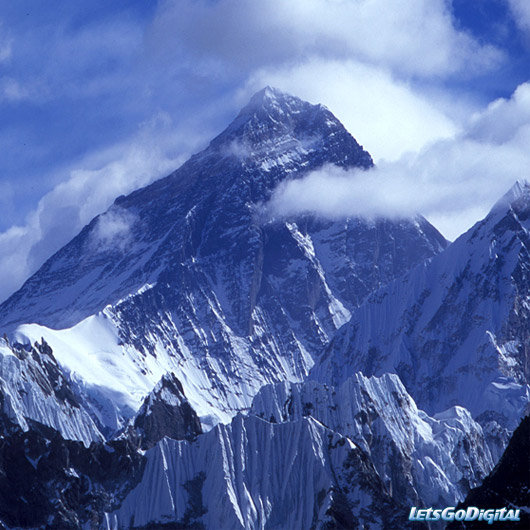
I think that one of the main reasons the characters in the novel got into so much trouble is because of their intense pride and determination. Generally such attributes would be considered desirable, but in the situation of Mount Everest, they are foolish. Krakauer was sent on this trip to simply remain at base camp and document what goes on in preparation for a summit. Instead of sticking to this plan, he decided he would attempt to climb the mountain.

I think that this bad decision was caused by a type of blind ambition and sense of adventure that was present in Chris McCandless of Into the Wild as well. There is a certain trait that all great adventurers possess; a sort of desire for danger and excitement. This insatiable thirst for adventure often leads such a person into a situation that they are unable to recover from. Such was the case with McCandless, and if it weren't for an extreme amount of luck, it would have been the same for Krakauer.

This adventurous spirit is what led Krakauer on this journey. All of his decisions were influenced by this illogical desire to scale the tallest mountain in the world. Perhaps if he weren't so blinded by this ambition he could have made some better decisions.

Independent Reading: Advice Column (Prompt 13)


The choices made by the characters are something that is vitally important to the plot and significance of this story. In my opinion, if a few decisions had been made differently then they were then this entire tragedy could have been avoided. Firstly, I believe that the trained guides should have realized that the people they were guiding were ill equipped to make such a trip. They simply did not have the experience or skill level to take on Everest.

Despite poor judgment in undertaking the journey, many deaths still could have been avoided if a few different choices could have been made while on the mountain. I think that the guides were a bit too arrogant in their abilities and trusted in the abilities of the other climbers too much so. Instead of being consumed by their goal to reach the summit, if the climbers had just used simple reason, then they probably would have been able to escape to safety relatively unscathed.

While these decisions ultimately led to many deaths, one can not put all the blame of these deaths on simple bad decision making. Perhaps the entire tragedy could have been avoided, but the truth of the matter is that mother nature has her own plans and when you try to defy such plans, you end up in a bad situation. Maybe if the climbers were a bit more respectful of the mountain and slightly less arrogant with their own capabilities then they would have avoided this dreadful tragedy.

Independent Reading: Remorse (Chapter 21, Prompt 5)


One of the best parts of this entire novel is that the entire thing is rather moving. One part that stuck out to me in particular is when Krakauer returns to base camp and realizes that he is safe and he weeps "like I hadn't wept since I was a small boy." This is the falling action of the events that took place on the mountain and it is when I, as the reader could finally take a breath and digest all the tragedy that took place in the last few chapters. Until that point, Krakauer told the story as though in a sort of dream like state and many of the deaths did not quite register with me, but once he descends to base camp and I realize that he is safe I finally had a chance to reflect on his journey.

So many people died up on that mountain I just can't imagine what must have been going through his mind when he realized that he was going to be fine. I imagine that he must feel some guilt for having survived the when so many of his fellow climbers perished. At the same time though, he also must have felt extremely fortunate to still be alive.

I'd imagine that such a contradiction would wreak havoc with ones mental status as he went back and forth with feelings of guilt and joy for having survived. Perhaps by telling his story, he was able to alleviate some of this guilt.

Independent Reading: The Quest for Self-Realization (Prompt 16)

Throughout this year, all of our novels have been designed around a single main character going through some life-changing experience. Into Thin Air follows a similar plot line as Krakauer describes the events that transpired on Everest and the reader is able to see how these events have changed him. Of all the things we have discussed in class, this book most closely relates to our summer reading book Into the Wild and the journey that Chris McCandless goes through.

I also think that Krakauer shares some of the same characteristics of Ernesto in The Motorcycle Diaries. In that novel Ernesto's voyage changes his outlook on life and eventually reshapes the way that he continues his life. Krakauer undergoes a similar transition in Into Thin Air as his experiences on the mountain have surely changed the way that he leads the rest of his life. Unfortunately there is less information on how Krakauer has transformed, but he definitely exhibits a greater respect for life and its fragility.

Independent Reading: The Title (Prompt 18)


I think that Krakauer's choice in title is very clever. Into Thin Air references both their journey to the summit of Everest as well as summing up the treacherousness of the trip. When I think of thin air I not only think of climbing and high altitudes, but I conjure up images of a dangerous trip. I also think that there is a certain level of vanishing in the title. When someone wants to explain how something vanishes, they usually say that that something vanishes into thin air. The many men that died on the Everest trip can be said to have vanished into thin air.

If I had to come up with my own title, I would have a difficult time coming up with something as clever as Krakauer. Something like The Everest Calamity could work because I believe it successfully sums up what occurred on the mountain. My overall impression of the novel is that the entire trip was a disaster and I think that this should be included in the title. The name of Krakauer's article that was published in Outsider magazine was "The Mess on Everest" and this seems to be more similar to my title that I proposed.

Overall, I like Krakauer's title and I wouldn't change it, but if I had to I would make it include something about how the entire thing was a disaster.

Independent Reading: Into the Thin, Wild Air (Prompt 10)


While reading this book I couldn't help but make a lot of connections to my summer reading book Into the Wild by Krakauer. When I read Into the Wild this summer I thought that Krakauer was a bit of a weirdo for admiring McCandless as much as he did. He seemed to romanticize his journey and I could definitely sense a certain amount of admiration in Krakauer's account of his travels. At the time I did not understand this connection that Krakauer had with McCandless, but I now I have much greater understanding after reading this book. It is clear that Krakauer has been through a lot of the same experiences as McCandless and he could easily connect to his journey as well as his mindset. It takes a certain type of person to go through the things that both Krakauer and McCandless went through and the fact that they share this common link makes me appreciate Krakauer's opinion of McCandless that I read this summer.

Independent Reading: The Perfect Storm (Prompt 15)


I believe that the cover art for the movie "The Perfect Storm" sums up what happened on the summit of Everest in this novel. In the movie, a combination of events leads to what people call "the perfect storm" which leads to the demise of the entire crew of a vessel. I thought of this movie because a similar set of circumstances happen in the novel. The perfect storm in the book exists as well as the climbers were unprepared and the weather conditions were perfect for disaster. Just as the climbers were making their final push the storms struck and devastated the climbers. From the very beginning of the novel when Krakauer talks about the disaster, I took note of all the things along the way that contributed to it. Perhaps the entire thing could have been avoided with the slightest change in discretion. In one of my earlier posts, Krakauer mentions his apprehension regarding the skill level of some of the climbers. If instead of only thinking these thoughts, he had acted on them, then the entire disaster could have been avoided.

Independent Reading: Vain Hopes (Chapter 3, Prompt 14)

I suspected that each of my teammates hoped as fervently as I that Hall had been careful to weed out clients of dubious ability, and would have the means to protect each of us from one another's shortcomings.
This quotation is very important in this novel as it describes Krakauer's initial worries about how well equipped and prepared his fellow climbers are for their summit. Having completed the book, I can look back with perspective and say that these concerns were not without merit. Many of the tragedies on the journey could have been avoided if the climbers were more experienced in such climbs. He should not have simply "hoped" that the guides would be able to protect them from each others "shortcomings." Climbing Everest is one of the most demanding tasks that a human can undertake and for so many of the climbers to be lacking experience, there was a recipe for disaster being brewed.

I think that the guides should have know that their clients were not skilled enough to climb and should not have allowed them to make the trip. I can't place all the blame on the guides as the clients themselves should have known their own limits, but some of the blame must lie with them.

Independent Reading: Everest, A History (Chapter 2, Prompt 12)


In this chapter, Krakauer discusses the history of Everest including some of the more notable summit attempts. I like this inclusion in the book as I believe it provides a certain degree of perspective before the reader hears about Krakauer's attempts. Hearing about the history of the peak helped me to understand some of its legend and lore. Ever since people realized it was the tallest point in the world, people wanted to climb it. I believe Krakauer included this history for just this purpose. He wanted his readers to understand why people have such a burning desire to climb the mountain and how such a goal can absolutely consume you. At the end of the chapter, Krakauer starts to talk about how his own expedition took shape. While I don't think it was inappropriate to include this I do believe it probably should have been omitted. It doesn't seem to fit with the rest of the chapter which simply chronicles the myth of the mountain. Despite this, I do believe the chapter was well constructed and I don't think that anything was omitted.

Monday, March 23, 2009

Independent Reading: The Summit Already? (Chapter 1, Prompt 1)


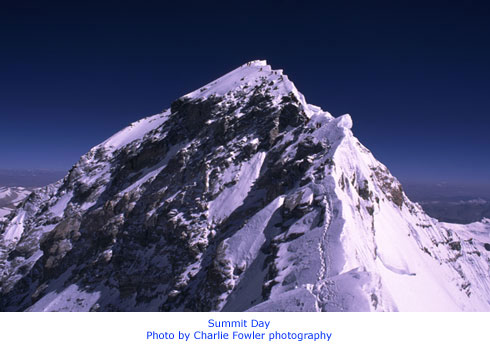
My early impressions of the book from chapter one are not very favorable. I disliked this chapter because it is out of chronological order and Krakauer narrates in a convoluted, choppy manner. The book begins with Krakauer having reached the summit. The rest of the chapter contains an account of the beginning of his descent as well as a reflection on the ascent and the difficulties they encountered. From reading the summary of the book, I expected Krakauer to begin with the plan, then the ascent, then the descent. I don't like it when an author narrates a true story out of order as it seems to ruin some of its validity. I would prefer that Krakauer simply told his story chronologically. I hope that the rest of the novel follows a path that is easier to understand.

Into Thin Air


For the next week, I will be updating my blog with posts on the novel Into Thin Air by Jon Krakauer. The novel documents Krakauer's ascent of Mount Everest and the tragedy that occurred. I hope that you find my posts insightful and intriguing as they should offer my thoughts on the book.

Thursday, March 12, 2009

Che Thesis

Thesis: Ernesto's journey throughout South America in The Motorcycle Diaries revealed the futility of his efforts to help people as a doctor and transformed him into a guerrilla named Che.

Wednesday, March 11, 2009

Do Now: Cuzco


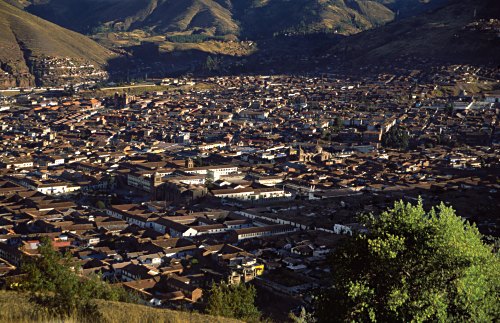
Che's description of Cuzco was extremely detailed as he rambled on for about 15 pages discussing the area's history. Do some research on the city of Cuzco and give some reasons why you think Che devoted so much time to discuss the city.

Monday, March 9, 2009

Essential Questions

Che wanted to have a positive impact on the world around his by improving the lives of others. At first, he was young and naive and believed that he would be able to achieve this goal by becoming a doctor. During his travels chronicled in The Motorcycle Diaries he realized that the world's problems were much to deeply rooted to be effected by the work of a single doctor. As a doctor, he could only help individuals, but as a revolutionary, he could help the entire working class. I believe this logic is what led him to abandon his medical career in favor of a more drastic movement. While I believe his intentions were always good, his means to achieve his goals were a bit radical. He apparently subscribed to a Machiavellian principle of the ends justifying the means as his guerrilla methods often resorted to violence.

Thursday, March 5, 2009

Chile 6 Word Poem


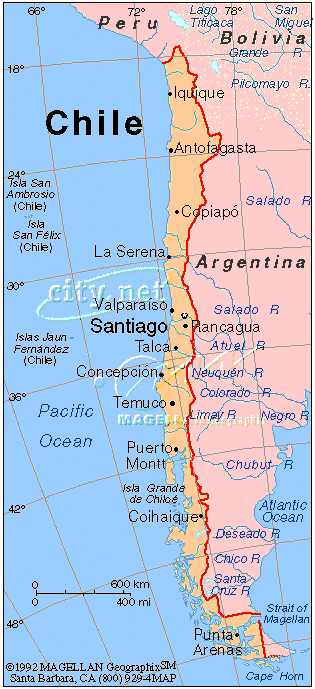
Strip of Andes in South America.

Friday, February 27, 2009

6 Word America Poem


We are better than the rest.

Thursday, February 26, 2009

My Ideology

I am a person of very few values and ideals. Perhaps my one great ideal is that "the ends justify the means." This Machiavellian principle is something that many people frown upon as being cold, and while there is certainly some truth to that, I don't believe it is a bad way to lead a lifestyle. Critics of such an approach argue that living one's life by this ideal would lead to breaches in morals; however, people such as myself who subscribe to this belief have a very loose interpretation of morals anyway. I would not say that I would go to ANY lengths to achieve my goals, but I do believe I would be willing to go quite a bit further than most. As long as the end result is just, then the methods to attain this goal are acceptable.

Wednesday, February 25, 2009

Pakistan


I don't really think the situation in Pakistan compares to what Che was trying to do in Bolivia. Al Qaeda and the Taliban are much more powerful then the group of rebels Che tried to lead. Che's group was made up of Bolivian's who wanted to overthrow their current government, whereas Al Qaeda and the Taliban have more ambitious goals throughout the entire middle east, not just one area. The only thing that I think really compares is the way in which the United States is intervening to protect our own best interests.

Tuesday, February 24, 2009

Che's Romantic Descriptions


Che uses specific and appropriate word choice as he describes his surroundings, painting a picture of his image in the reader’s mind. For example, the passage:
“The road snakes between the low foothills that sound the beginning of the great cordillera of the Andes, then descends steeply until it reaches an unattractive, miserable town, surrounded in sharp contrast by magnificent, densely wooded mountains.” (44)

This description is extremely vivid and descriptive and successfully depicts Ernesto’s surroundings. The reader can also conclude from the passage that Ernesto was aware and perhaps in awe of the scenery. Throughout much of the novel, Ernesto focuses on these specific descriptions of his surroundings. I believe that he probably does this in an effort to bring the reader on the trip with him. He wants to feel how small the great Andes mountains make a traveler seem. He the reader to fully understand the breathtaking beauty of his surroundings. Ultimately, he wants the reader to accompany him on his journey.

A second passage shows how Che has a tendency to be a bit dramatic.
“The enormity of our endeavor escaped us in those moments; all we could see was the dust on the road ahead and ourselves on the bike, devouring kilometers in our flight northward.” (33)

This passage is enjoyable to read, but it seems to me as though Che is trying to impress the reader by making the journey appear more adventurous than perhaps it had to be. This type of word choice is maintained throughout the entire novel as Che seems to embellish some of his experiences. While I do believe that this makes his journals much more interesting to read some of his descriptions seem a bit over dramatic and they dull the reader to the experiences that truly are unique. By making everything seem so special, the reader becomes a bit jaded and can't appreciate the parts of the novel that should stick out a bit more. Che almost considers himself to be a sort of knight on this journey instead of a bum who must rely on the assistance of others to sustain himself.

Wednesday, February 18, 2009

Che's Death

I think that Che probably was executed by the Bolivian government. He was captured by the Bolivian government and was basically trying to lead a coup. Such an offense would be punishable by death and so I believe the Bolivian government gave an order to have Che executed. It's interesting to me that Che's death seems to be completely without any type of meaning. He was in Bolivia leading a Revolution that would likely never succeed and he was captured and killed. Hardly heroic. In fact, his death is almost pitiful. A pitiful end to a life of misled purpose.

Tuesday, February 17, 2009

My Great Adventure

My quest began the beginning of the second semester of my senior year. The goal: to not open my backpack at home for the rest of the year. An ambitious undertaking, but not unachievable. My clever cunning and tremendous knack for attaining grades that far exceed my effort level made such an effort both appealing and possible. How does one complete such a task? Well, firstly, school time would have to be utilized to the max. If I wasted my time during study hall than I would surely be unable to complete my work without some sort of input at home. Next, I had to plan out my work that I would need to do at home before I got there. For instance if I had a calc test the following day, I would have to carry my binder home so as not to violate the rules of my task. It began easily, the start of the semester was a cakewalk. Unfortunately, the past week or so has not gone so well. Homework is getting more difficult to complete at school and my grades are suffering a bit as a result. With no work to do at home, I'm often extremely bored and I realize there is nothing lonelier than adventure. Despite these setbacks, the quest continues.

Thursday, February 12, 2009

Che's Ideology

I believe that Che's ideology or philosophy would be governed by the idea of socialism and the "greater good." Che was a staunch advocate of marxist philosophy and he lived his life by trying to demolish capitalism and spread socialism. Perhaps his downfall is the fact that he bought into the idea of socialism a bit too much. He had visions of a Utopia in which no one worked for a personal profit and everyone was invested in the interests of others. While this would certainly make for a better world, it is impractical to assume that such a world could exist. Che was too socialist for Fidel Castro as he advocated that Cuba should give away their wealth to countries in need. While altruistic, this idea was absurd and Castro was against such charity.

Tuesday, February 10, 2009

My Documentary


If I were to create my own documentary, I would make one for Wilt Chamberlain. I enjoy watching basketball and some of the records that he holds are staggering. I think it would be interesting to investigate the state of the NBA at the time he played as well as what sort of competition he was up against. Chamberlain also paved the way for future NBA players and the salaries that they make as he was the highest paid player in the league throughout much of his career. His personal life is also interesting as he once claimed to have slept with over 20,000 women in his life. All of these facets of his life would be interesting both to explore and document.

Monday, February 9, 2009

Che Documentary


If I were creating a documentary on Che Guevara, I think that I would put most of the emphasis on his involvement with Fidel Castro and the Cuban military. I think that the heroic revolutionary role has been sufficiently covered in his novels as well as general perception so I think the population needs to learn some of the reasons he is despised instead of idolized. I would probably hire Glen Beck as a director as I believe he would love to take the opportunity to reveal who the true Che Guevara is. Despite wanting to reveal Che's shortcomings, it would be unfair not to include aspects of his life such as his epic journey that he documents in The Motorcycle Diaries.

Wednesday, February 4, 2009

Road Trip

I have never been on a road trip and the idea, quite frankly, does not appeal to me. Something about being stuck in a car the majority of the time makes me think that such a trip would not be much fun. Despite that, I suppose if I were to go on a road trip, I would make it as short as possible. What exactly defines something as a "Road Trip" as opposed to just a long drive? Does it have to include multiple days on the road? If so, then I would definitely rent an RV and hire someone to drive it for me as well. Many would claim that this would take the charm out of the trip, but I don't really think there is any charm in aimless wandering. If I were forced into such a journey, I suppose I would want to take the trip during the summer and I would like to work my way down the coast including stops in Washington DC, North and South Carolina, and finally Florida. Really though, why not just fly?

Tuesday, February 3, 2009

Preview to a Novel and Impressions

Front Cover

The Motorcycle Diaries by Ernesto Che Guevara
New York Times Best Seller
The Book is about a Latin American Journey
Who’s on the cover?
What relevance does the motorcycle have?

The Back Cover

The back cover offers a brief synopsis of the novel’s premise that seems to simply be a diary of a young Ernesto as he goes on a journey throughout Latin America.

Inside the Book

Copyright 2003
Table of Contents with chapter titles
The author seems to write in a detailed and meticulous manner from the page that I read. It is very dull reading.


Overall Impressions: I feel somewhat conflicted between the Glen Beck segment and my preview on the novel. From the novel, I expect a dull account of a young man trying to find his way in life while traveling through Latin America. From Glen Beck’s account, I expected Guevara to be some bloodthirsty executioner. I suppose I will just have to read the book to fully understand this apparent discrepancy.
As far as general interest in the novel, I have very little. I anticipate struggling through yet another book this marking period. At least this one is short so it will likely be more endurable than Invisible Man.

Judge a Book by its Cover?

When I am getting ready to read a book, I rarely simply pick up a book that I have no previous knowledge and start reading. I would never walk into a library, pick up a book and decide to read it based on a cursory look at the cover, back cover, etc. I only read a book if I have read one by the author previously, if I'm forced to read it by my English teacher, or if the book comes with the recommendation of someone who has similar interests in books as me. Books rarely capture my attention and maintain it throughout, but the few exceptions are usually thrillers or suspense novels. The Da Vinci Code and Angels and Demons both by Dan Brown. I think they were able to hold my attention because they had a fast pace with a particular emphasis on suspense and action.

Monday, February 2, 2009

The Two Faces of Che Guevara


I think that it is very interesting how Hollywood is willing to ignore the actual history of Che Guevara in order to make money. It is ridiculous that he has been romanticized in such a way that many people idolize him as a symbol of rebellion. As mentioned on the Glenn Beck Show, Fidel Castro effectively transformed Guevara from a brutal executioner to a heroic rebel. This has been made possible by the United States’ tendency to manipulate any story in an attempt to milk as much money out of it as possible.

The film is laughably inaccurate according to Beck, but it will likely entertain viewers nonetheless. I agree with the analyst that appeared on the Glenn Beck Show that the kids who where the shirts are likely just ignorant to his historical background. The Hollywood directors and the researchers involved in the film; however, have full knowledge of what they are romanticizing.

I hope that by reading the book, watching the movie, and doing some research on Che I will be able to come to an educated conclusion about how he should be viewed. I assume that the reason for the apparent difference in opinions about Che comes from the fact that his actions must have been considered quite provocative; with a group of people finding them admirable and another group finding them despicable.

Beck’s word choice and passion show how adamant he feels about the issue. It is clear from listening to him that he has a genuine interest in what he is reporting which makes him very convincing to listen to.

Thursday, January 29, 2009

Welcome!

Welcome! I hope you find my posts unique, intriguing, and insightful. Unfortunately, I doubt they will be. Once again, welcome.