Monday, March 30, 2009

Independent Reading: Hubris (Prompt 3)


I think that one of the main reasons the characters in the novel got into so much trouble is because of their intense pride and determination. Generally such attributes would be considered desirable, but in the situation of Mount Everest, they are foolish. Krakauer was sent on this trip to simply remain at base camp and document what goes on in preparation for a summit. Instead of sticking to this plan, he decided he would attempt to climb the mountain.

I think that this bad decision was caused by a type of blind ambition and sense of adventure that was present in Chris McCandless of Into the Wild as well. There is a certain trait that all great adventurers possess; a sort of desire for danger and excitement. This insatiable thirst for adventure often leads such a person into a situation that they are unable to recover from. Such was the case with McCandless, and if it weren't for an extreme amount of luck, it would have been the same for Krakauer.

This adventurous spirit is what led Krakauer on this journey. All of his decisions were influenced by this illogical desire to scale the tallest mountain in the world. Perhaps if he weren't so blinded by this ambition he could have made some better decisions.

Independent Reading: Advice Column (Prompt 13)


The choices made by the characters are something that is vitally important to the plot and significance of this story. In my opinion, if a few decisions had been made differently then they were then this entire tragedy could have been avoided. Firstly, I believe that the trained guides should have realized that the people they were guiding were ill equipped to make such a trip. They simply did not have the experience or skill level to take on Everest.

Despite poor judgment in undertaking the journey, many deaths still could have been avoided if a few different choices could have been made while on the mountain. I think that the guides were a bit too arrogant in their abilities and trusted in the abilities of the other climbers too much so. Instead of being consumed by their goal to reach the summit, if the climbers had just used simple reason, then they probably would have been able to escape to safety relatively unscathed.

While these decisions ultimately led to many deaths, one can not put all the blame of these deaths on simple bad decision making. Perhaps the entire tragedy could have been avoided, but the truth of the matter is that mother nature has her own plans and when you try to defy such plans, you end up in a bad situation. Maybe if the climbers were a bit more respectful of the mountain and slightly less arrogant with their own capabilities then they would have avoided this dreadful tragedy.

Independent Reading: Remorse (Chapter 21, Prompt 5)


One of the best parts of this entire novel is that the entire thing is rather moving. One part that stuck out to me in particular is when Krakauer returns to base camp and realizes that he is safe and he weeps "like I hadn't wept since I was a small boy." This is the falling action of the events that took place on the mountain and it is when I, as the reader could finally take a breath and digest all the tragedy that took place in the last few chapters. Until that point, Krakauer told the story as though in a sort of dream like state and many of the deaths did not quite register with me, but once he descends to base camp and I realize that he is safe I finally had a chance to reflect on his journey.

So many people died up on that mountain I just can't imagine what must have been going through his mind when he realized that he was going to be fine. I imagine that he must feel some guilt for having survived the when so many of his fellow climbers perished. At the same time though, he also must have felt extremely fortunate to still be alive.

I'd imagine that such a contradiction would wreak havoc with ones mental status as he went back and forth with feelings of guilt and joy for having survived. Perhaps by telling his story, he was able to alleviate some of this guilt.

Independent Reading: The Quest for Self-Realization (Prompt 16)

Throughout this year, all of our novels have been designed around a single main character going through some life-changing experience. Into Thin Air follows a similar plot line as Krakauer describes the events that transpired on Everest and the reader is able to see how these events have changed him. Of all the things we have discussed in class, this book most closely relates to our summer reading book Into the Wild and the journey that Chris McCandless goes through.

I also think that Krakauer shares some of the same characteristics of Ernesto in The Motorcycle Diaries. In that novel Ernesto's voyage changes his outlook on life and eventually reshapes the way that he continues his life. Krakauer undergoes a similar transition in Into Thin Air as his experiences on the mountain have surely changed the way that he leads the rest of his life. Unfortunately there is less information on how Krakauer has transformed, but he definitely exhibits a greater respect for life and its fragility.

Independent Reading: The Title (Prompt 18)


I think that Krakauer's choice in title is very clever. Into Thin Air references both their journey to the summit of Everest as well as summing up the treacherousness of the trip. When I think of thin air I not only think of climbing and high altitudes, but I conjure up images of a dangerous trip. I also think that there is a certain level of vanishing in the title. When someone wants to explain how something vanishes, they usually say that that something vanishes into thin air. The many men that died on the Everest trip can be said to have vanished into thin air.

If I had to come up with my own title, I would have a difficult time coming up with something as clever as Krakauer. Something like The Everest Calamity could work because I believe it successfully sums up what occurred on the mountain. My overall impression of the novel is that the entire trip was a disaster and I think that this should be included in the title. The name of Krakauer's article that was published in Outsider magazine was "The Mess on Everest" and this seems to be more similar to my title that I proposed.

Overall, I like Krakauer's title and I wouldn't change it, but if I had to I would make it include something about how the entire thing was a disaster.

Independent Reading: Into the Thin, Wild Air (Prompt 10)


While reading this book I couldn't help but make a lot of connections to my summer reading book Into the Wild by Krakauer. When I read Into the Wild this summer I thought that Krakauer was a bit of a weirdo for admiring McCandless as much as he did. He seemed to romanticize his journey and I could definitely sense a certain amount of admiration in Krakauer's account of his travels. At the time I did not understand this connection that Krakauer had with McCandless, but I now I have much greater understanding after reading this book. It is clear that Krakauer has been through a lot of the same experiences as McCandless and he could easily connect to his journey as well as his mindset. It takes a certain type of person to go through the things that both Krakauer and McCandless went through and the fact that they share this common link makes me appreciate Krakauer's opinion of McCandless that I read this summer.

Independent Reading: The Perfect Storm (Prompt 15)


I believe that the cover art for the movie "The Perfect Storm" sums up what happened on the summit of Everest in this novel. In the movie, a combination of events leads to what people call "the perfect storm" which leads to the demise of the entire crew of a vessel. I thought of this movie because a similar set of circumstances happen in the novel. The perfect storm in the book exists as well as the climbers were unprepared and the weather conditions were perfect for disaster. Just as the climbers were making their final push the storms struck and devastated the climbers. From the very beginning of the novel when Krakauer talks about the disaster, I took note of all the things along the way that contributed to it. Perhaps the entire thing could have been avoided with the slightest change in discretion. In one of my earlier posts, Krakauer mentions his apprehension regarding the skill level of some of the climbers. If instead of only thinking these thoughts, he had acted on them, then the entire disaster could have been avoided.

Independent Reading: Vain Hopes (Chapter 3, Prompt 14)

I suspected that each of my teammates hoped as fervently as I that Hall had been careful to weed out clients of dubious ability, and would have the means to protect each of us from one another's shortcomings.
This quotation is very important in this novel as it describes Krakauer's initial worries about how well equipped and prepared his fellow climbers are for their summit. Having completed the book, I can look back with perspective and say that these concerns were not without merit. Many of the tragedies on the journey could have been avoided if the climbers were more experienced in such climbs. He should not have simply "hoped" that the guides would be able to protect them from each others "shortcomings." Climbing Everest is one of the most demanding tasks that a human can undertake and for so many of the climbers to be lacking experience, there was a recipe for disaster being brewed.

I think that the guides should have know that their clients were not skilled enough to climb and should not have allowed them to make the trip. I can't place all the blame on the guides as the clients themselves should have known their own limits, but some of the blame must lie with them.

Independent Reading: Everest, A History (Chapter 2, Prompt 12)


In this chapter, Krakauer discusses the history of Everest including some of the more notable summit attempts. I like this inclusion in the book as I believe it provides a certain degree of perspective before the reader hears about Krakauer's attempts. Hearing about the history of the peak helped me to understand some of its legend and lore. Ever since people realized it was the tallest point in the world, people wanted to climb it. I believe Krakauer included this history for just this purpose. He wanted his readers to understand why people have such a burning desire to climb the mountain and how such a goal can absolutely consume you. At the end of the chapter, Krakauer starts to talk about how his own expedition took shape. While I don't think it was inappropriate to include this I do believe it probably should have been omitted. It doesn't seem to fit with the rest of the chapter which simply chronicles the myth of the mountain. Despite this, I do believe the chapter was well constructed and I don't think that anything was omitted.

Monday, March 23, 2009

Independent Reading: The Summit Already? (Chapter 1, Prompt 1)


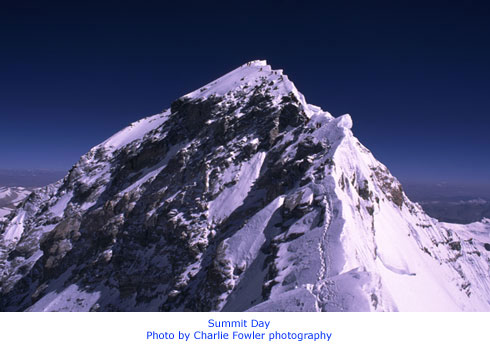
My early impressions of the book from chapter one are not very favorable. I disliked this chapter because it is out of chronological order and Krakauer narrates in a convoluted, choppy manner. The book begins with Krakauer having reached the summit. The rest of the chapter contains an account of the beginning of his descent as well as a reflection on the ascent and the difficulties they encountered. From reading the summary of the book, I expected Krakauer to begin with the plan, then the ascent, then the descent. I don't like it when an author narrates a true story out of order as it seems to ruin some of its validity. I would prefer that Krakauer simply told his story chronologically. I hope that the rest of the novel follows a path that is easier to understand.

Into Thin Air


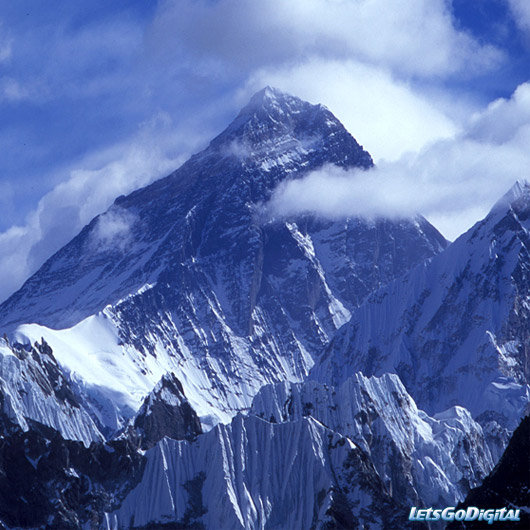
For the next week, I will be updating my blog with posts on the novel Into Thin Air by Jon Krakauer. The novel documents Krakauer's ascent of Mount Everest and the tragedy that occurred. I hope that you find my posts insightful and intriguing as they should offer my thoughts on the book.

Thursday, March 12, 2009

Che Thesis

Thesis: Ernesto's journey throughout South America in The Motorcycle Diaries revealed the futility of his efforts to help people as a doctor and transformed him into a guerrilla named Che.

Wednesday, March 11, 2009

Do Now: Cuzco


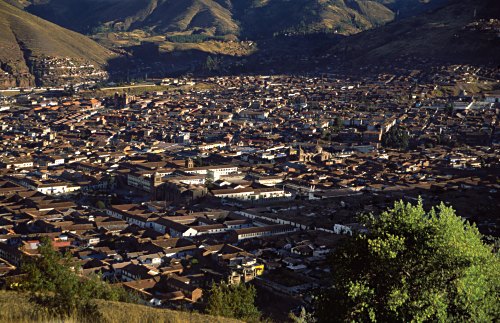
Che's description of Cuzco was extremely detailed as he rambled on for about 15 pages discussing the area's history. Do some research on the city of Cuzco and give some reasons why you think Che devoted so much time to discuss the city.

Monday, March 9, 2009

Essential Questions

Che wanted to have a positive impact on the world around his by improving the lives of others. At first, he was young and naive and believed that he would be able to achieve this goal by becoming a doctor. During his travels chronicled in The Motorcycle Diaries he realized that the world's problems were much to deeply rooted to be effected by the work of a single doctor. As a doctor, he could only help individuals, but as a revolutionary, he could help the entire working class. I believe this logic is what led him to abandon his medical career in favor of a more drastic movement. While I believe his intentions were always good, his means to achieve his goals were a bit radical. He apparently subscribed to a Machiavellian principle of the ends justifying the means as his guerrilla methods often resorted to violence.

Thursday, March 5, 2009

Chile 6 Word Poem


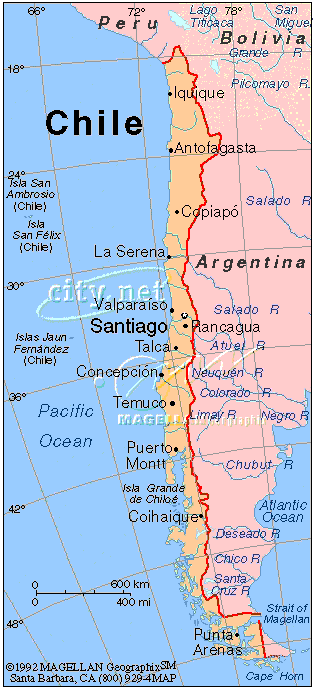
Strip of Andes in South America.